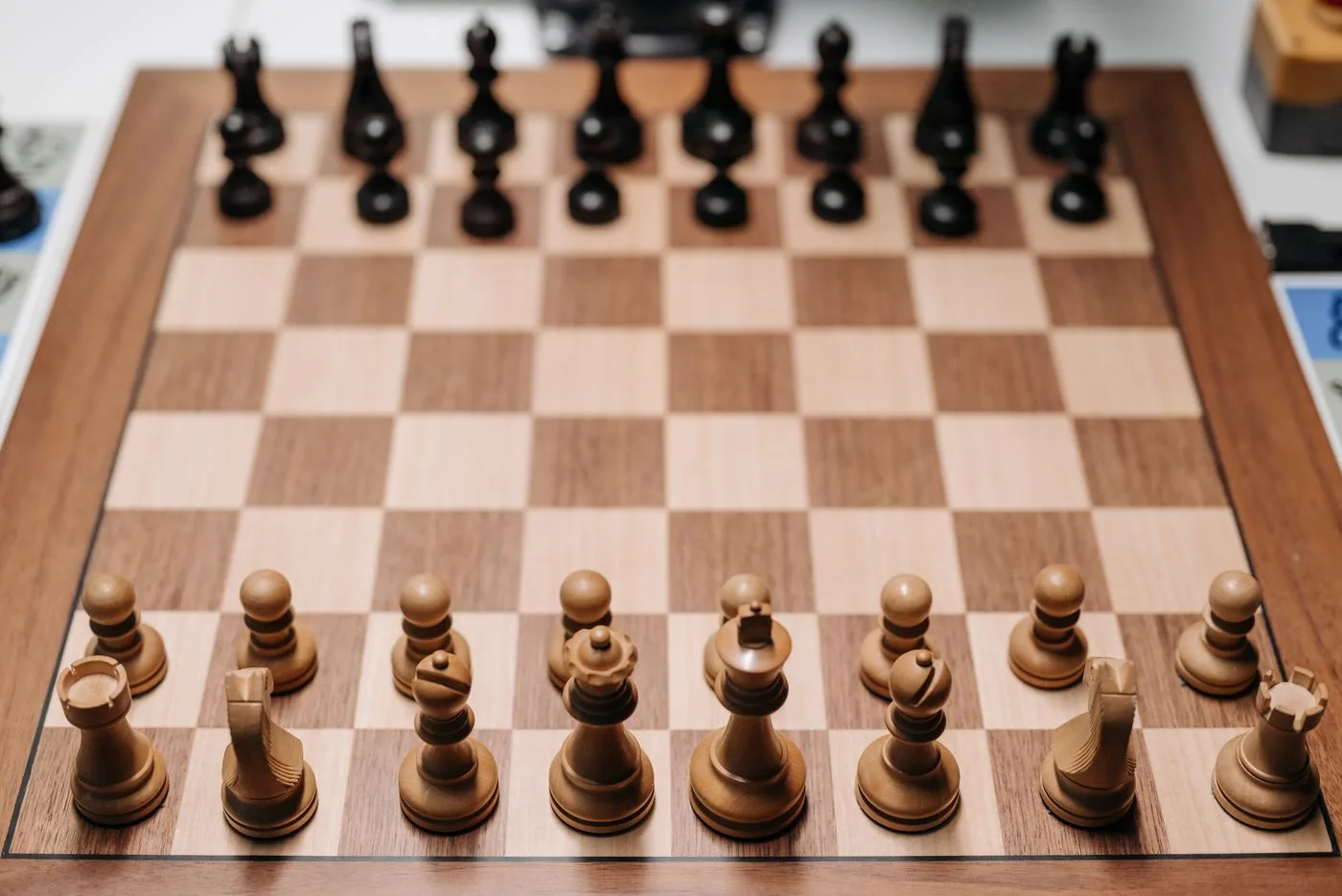
Set up the board
Place a light square at your right-hand corner. The back rank is rook, knight, bishop, queen, king, bishop, knight, rook. Put the queen on her own color and a row of pawns in front. White moves first; players then alternate one move at a time.
Learn the pieces
Rooks travel along files and ranks; bishops travel diagonally. Queens combine both movements. Knights jump in an L shape: two squares in one direction and one across. Kings move one square in any direction, provided the destination is safe. Except for knights, pieces cannot jump over other pieces.
Understand pawns
Pawns move one square forward into an empty square and capture one square diagonally forward. A pawn may advance two squares from its starting square if both squares are empty. On reaching the last rank, it must become a queen, rook, bishop, or knight. En passant is a special capture available immediately after an adjacent enemy pawn advances two squares past your pawn.
Keep your king safe
Check means the king is attacked. You must escape by moving the king, capturing the attacker, or blocking the attack when possible. You may never leave your king in check. Checkmate ends the game: the checked king has no legal escape. Stalemate is different: a player has no legal move but is not in check, so the game is drawn.
Castle and finish a game
Castling moves the king two squares toward a rook and brings that rook beside it. Neither piece may have moved, the path must be clear, and the king cannot be in check, cross an attacked square, or land on one. Draws can also arise through dead positions, agreement, or repetition and move-count rules. Threefold repetition and the 50-move rule generally require a claim; fivefold repetition and 75 moves without a pawn move or capture trigger automatic draws, subject to the checkmate exception.
Your first practice session
Play a slow game. Before every move, ask: is my king safe, what did my opponent threaten, and is any piece undefended? Afterward, review one turning point. Understanding one mistake is more useful than memorizing a long engine line.