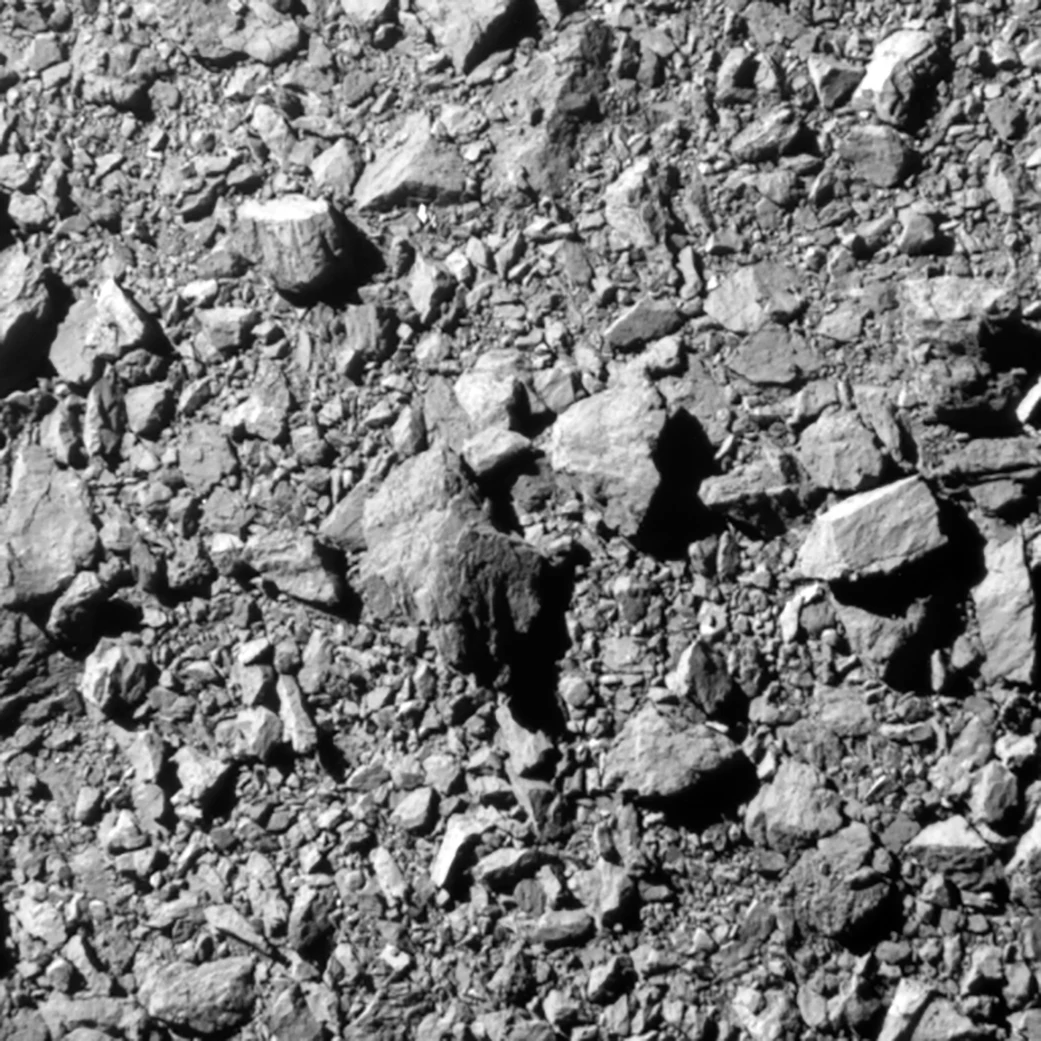
Which asteroid is in the new image?
The rocky body that dominates the image ESA released on November 5 is Didymos, the larger of two asteroids in the system. Dimorphos, the smaller body that orbits it, is mostly in shadow. Hera’s camera caught a side of Didymos that DART did not see on its final approach in 2022. The view shows a ridge around the larger asteroid’s middle, along with boulders and craters. A single image cannot tell researchers whether debris from the impact left any of those features.
What changed by 33 minutes?
NASA’s Double Asteroid Redirection Test, or DART, deliberately struck Dimorphos on September 26, 2022. NASA’s later analysis put the resulting orbital period at about 11 hours and 22 minutes, roughly 33 minutes shorter than before the collision. That is the time Dimorphos takes to circle Didymos. Researchers could see the change from Earth because the two bodies periodically pass in front of one another, producing dips in their combined brightness.
What can Hera measure that timing alone cannot?
Hera will survey the two bodies up close to help researchers estimate Dimorphos’s mass and study how it responded to the collision. Debris thrown off the surface can add to the push from a spacecraft impact, much as material shooting one way can push the remaining body the other way. A better estimate of the asteroid’s mass and a clearer view of the impact region will help researchers work out how much each effect contributed. That matters if engineers ever need to predict how a different asteroid would respond.
What should readers watch for next?
ESA plans to unveil more detailed views of both bodies on November 25. Look for images that show more of Dimorphos in daylight and for later measurements that put numbers on its mass and shape. Those measurements will take more observations than the first close-up. The Didymos system served as a test target and poses no impact threat to Earth.
Sources & further reading
- ESA: November 5 close-up release and November 25 image plans
- ESA: view Hera’s November 2026 image
- ESA: Hera mission and planetary defense objectives
- NASA: DART impact measurements and changes in shape and orbit
- NASA: Didymos and Dimorphos system and DART’s target
- OHB: spacecraft builder’s account of Hera’s first close-up
- NASA: image use guidelines