What did NASA decide?
NASA announced on November 7 that it would move ahead with PROMISE, a robotic rover designed to study the Moon’s south pole. NASA’s Jet Propulsion Laboratory plans to adapt the ground test vehicle for Curiosity and use hardware developed for Curiosity and Perseverance. Blue Origin’s Mark 1 lander is slated to deliver and deploy the rover. NASA is targeting a launch in late 2028 and plans an 18-month primary mission.
Why power a rover with radioactive decay?
Some depressions near the lunar south pole stay in permanent shadow, so a solar panel there has no direct sunlight to turn into electricity. PROMISE will use a radioisotope thermoelectric generator. Heat from the natural decay of radioactive material flows across devices that convert part of that heat into electricity. The rover can draw power without waiting to return to sunlight, which gives it more freedom to spend time where ice may be preserved.
How will it search for ice?
The rover will drill up to about one metre into the loose dust and rock that cover the Moon. Bringing material to the surface lets its instruments examine what the drill pulled from different depths. Cameras can show the terrain and a spectrometer can identify chemicals in a sample. Together those observations can help researchers distinguish a location that is cold enough to preserve ice from one where measurements actually detect it.
What does this tell us about the Moon Base schedule?
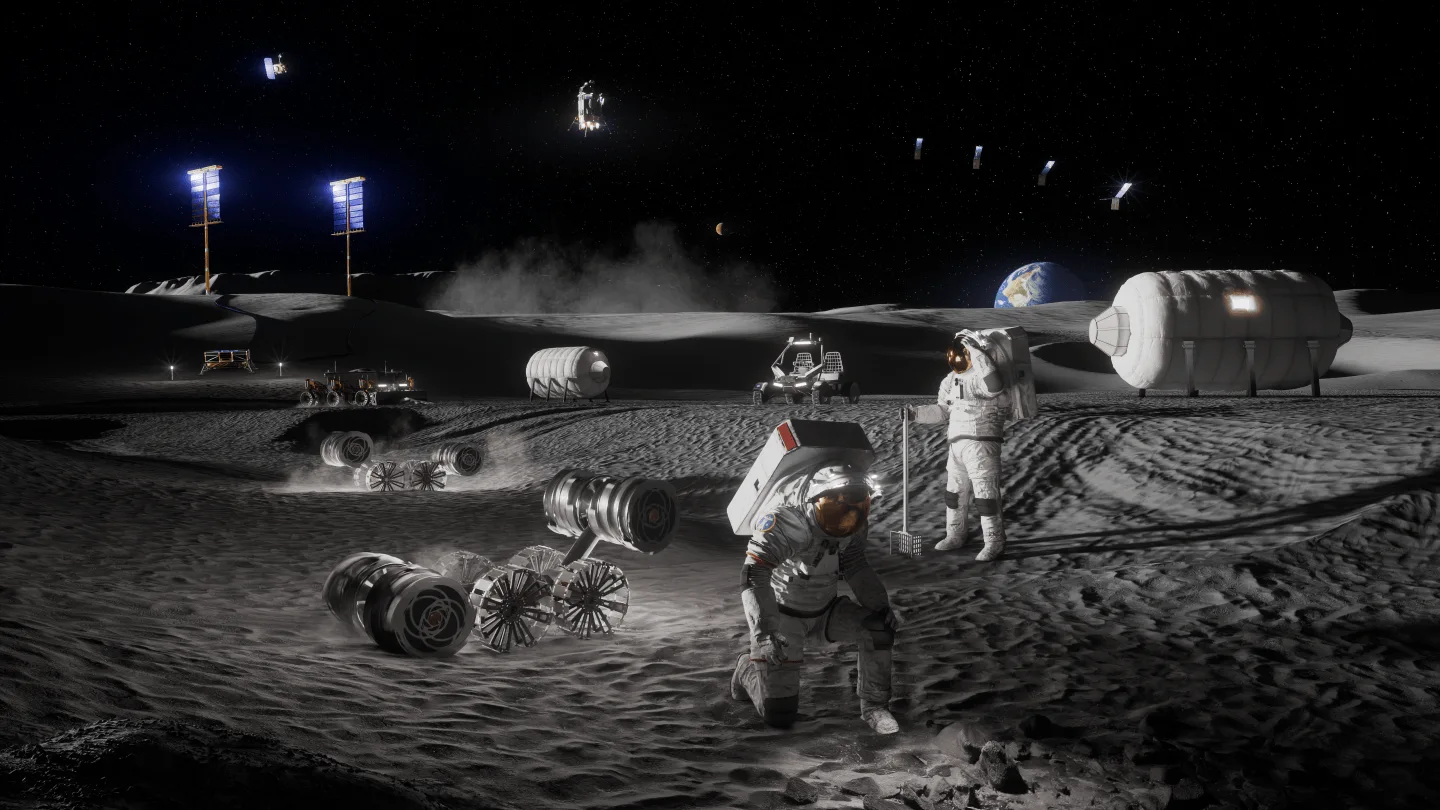
PROMISE is a scout in NASA’s initial phase of robotic work. Its measurements could inform where later missions land and what equipment they need. Keep three milestones separate as the project develops: launching from Earth, getting the rover safely off the lander, and collecting enough data to inform site planning. Late 2028 is NASA’s launch target for the rover. The crewed infrastructure in the illustration represents a longer-term plan.