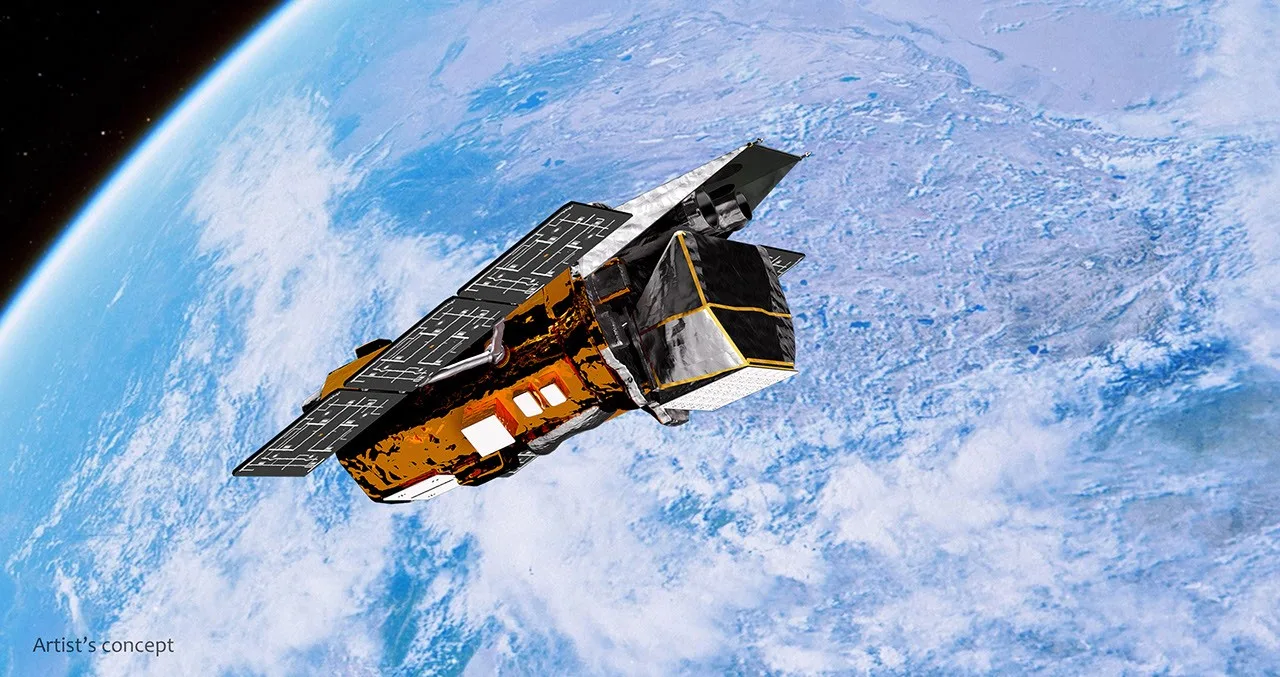
November 5 update: re-entry is confirmed
NASA’s updated notice says the US Space Force confirmed Swift’s atmospheric re-entry at 7:39 a.m. US Eastern Standard Time on November 4, 2026, over Indonesia’s North Sumatra region. That is 12:39 UTC, or 5:39 p.m. Pakistan Standard Time. NASA gives an approximate position of 3.4 degrees north latitude and 98.6 degrees east longitude. The confirmation supersedes the forecast described in our November 4 update.
A re-entry position is not a debris recovery report
NASA expected most of Swift to burn up but says some components may have survived. Its confirmation does not identify recovered fragments or establish where any surviving material reached the ground. Treat the stated position as the reported atmospheric re-entry location, not a verified debris collection site. The important change is that the spacecraft’s atmospheric return is now confirmed; the cited notice leaves surviving-material details uncertain.
A telescope can stop observing without its discoveries stopping
NASA announced on October 23, 2026 that its Neil Gehrels Swift Observatory had finished operations. The agency says the spacecraft made its last observation on October 20 and, at that time, expected atmospheric re-entry in the following weeks. Those are separate milestones: the end of observing is confirmed; re-entry was still an expectation in that announcement. The other distinction is more encouraging. Ending a spacecraft’s operations does not delete the measurements it has already sent home. The original October 24 explainer, updated November 5 above, separates the operational update from what researchers can still do with the scientific record.
What brought the mission to a stop
NASA’s operations update attributes Swift’s rapid orbital decline to atmospheric drag, increased by recent solar activity. On October 20 it reached roughly 275 kilometres above Earth, where drag prevented the spacecraft from maintaining the steady pointing its telescopes needed. It entered safe mode, and the team subsequently sent the command ending operations in preparation for re-entry. NASA also says a servicing effort ended without an attempt to raise the observatory’s orbit. This is not a report that a successful rescue was later reversed. Read the sequence carefully: an attempt to extend the mission, a return to observing, then the final operational limit.
Why speed was part of the telescope’s scientific value
NASA’s mission account explains that Swift detected gamma-ray bursts, located them, shared their positions and turned its telescopes toward the fading event, typically in about a minute. That sequence matters because the target itself changes while astronomers organize observations. A helpful analogy is documenting a brief event rather than photographing a permanent landmark: arriving later may answer a different question. The comparison is ours, not a claim that cosmic explosions behave like everyday scenes. The scientific point is that a telescope’s usefulness includes when it observes and how quickly its information can guide other instruments, not only how impressive its pictures look.
The archive is a scientific asset, not a replacement spacecraft
NASA reports an archive of approximately 12 terabytes, including nearly 22 years of observations and more than 1.5 million ultraviolet/optical images. Stored observations can support questions and comparisons that researchers did not originally plan. They cannot provide a new observation of an event occurring after the satellite stops working. That is the important limit. Imagine a dated collection of measurements: a researcher can compare entries, revisit a classification or test a proposed pattern, but cannot turn yesterday’s entry into today’s measurement. Keeping the archive available preserves evidence; maintaining future rapid-response capability is a separate challenge.
How to read the next update without confusing the milestones
Check whether a headline concerns operations, the orbit or analysis of existing data. An operations announcement tells you whether observations continue. A re-entry update concerns what happens to the spacecraft. A research paper may use observations gathered years earlier. These stories can all be accurate without describing the same event. NASA’s October 23 statement preceded the confirmed November 4 return. The timing at the top of this article comes from NASA’s subsequently updated notice. Follow the official Swift blog for subsequent operational updates. Our Hunter’s Moon guide offers another example of separating an astronomical event’s timing from the practical question a reader is trying to answer.
Frequently asked questions
When did Swift make its last observation?
NASA reports that Swift made its final observation on October 20, 2026.
Had Swift already re-entered the atmosphere in the announcement?
No. NASA’s October 23 announcement expected re-entry in the following weeks; it did not confirm that re-entry had already occurred.
Can researchers still use Swift data?
Yes. NASA says the public archive remains available. Existing data can support research, but it cannot replace new observations of future events.