The Moon is not restricted to the night shift
Seeing the Moon above a bright afternoon street is normal, not a sign that its orbit has suddenly changed. NASA explains that the Moon spends nearly as much time in the daytime sky as in the nighttime sky. It is visible because its surface reflects sunlight, rather than producing its own light. The daytime sky can make that reflected light harder to pick out, but does not switch it off. This basic science guide was checked October 29, 2026; it is not a prediction that the Moon will be visible from every location today.
Phase and visibility answer different questions
The Sun normally illuminates half of the Moon. As the Moon moves around Earth, we see different amounts of that sunlit half, producing its phases. A phase describes the illuminated portion facing us; it does not by itself say whether the Moon is above your local horizon. NASA lists a roughly 29.5-day phase cycle. At new Moon, its sunlit side faces largely away from Earth and it lies in the Sun’s part of the sky, which is why it is usually not visible. Being above the horizon is not the same as being easy to see.
Afternoon before full Moon, morning after it
NASA’s phase guide gives a useful broad pattern: first quarter rises around midday, and a waxing gibbous Moon rises during the afternoon. After full Moon, the waning gibbous Moon rises at night and remains up into the morning. Near full phase, the Moon is opposite the Sun in the sky, rising around sunset and setting around sunrise. These are approximate relationships, not a local timetable. Use your location and date for actual rise and set times instead of copying a clock time from another city.
Why the view changes when you try again tomorrow
NASA’s daytime-Moon explanation notes that moonset shifts later by about 50 minutes a day on average. That is a helpful reason not to expect the same sight at exactly the same time every morning, but it is not a precise daily scheduling rule. For a simple observing habit, note the date, time and direction when you spot it, then compare on another clear day. Clouds, buildings and the bright background can prevent a sighting even when the Moon is above the horizon. A missed view does not mean the phase calculation is wrong.
You do not need to wait for a full Moon
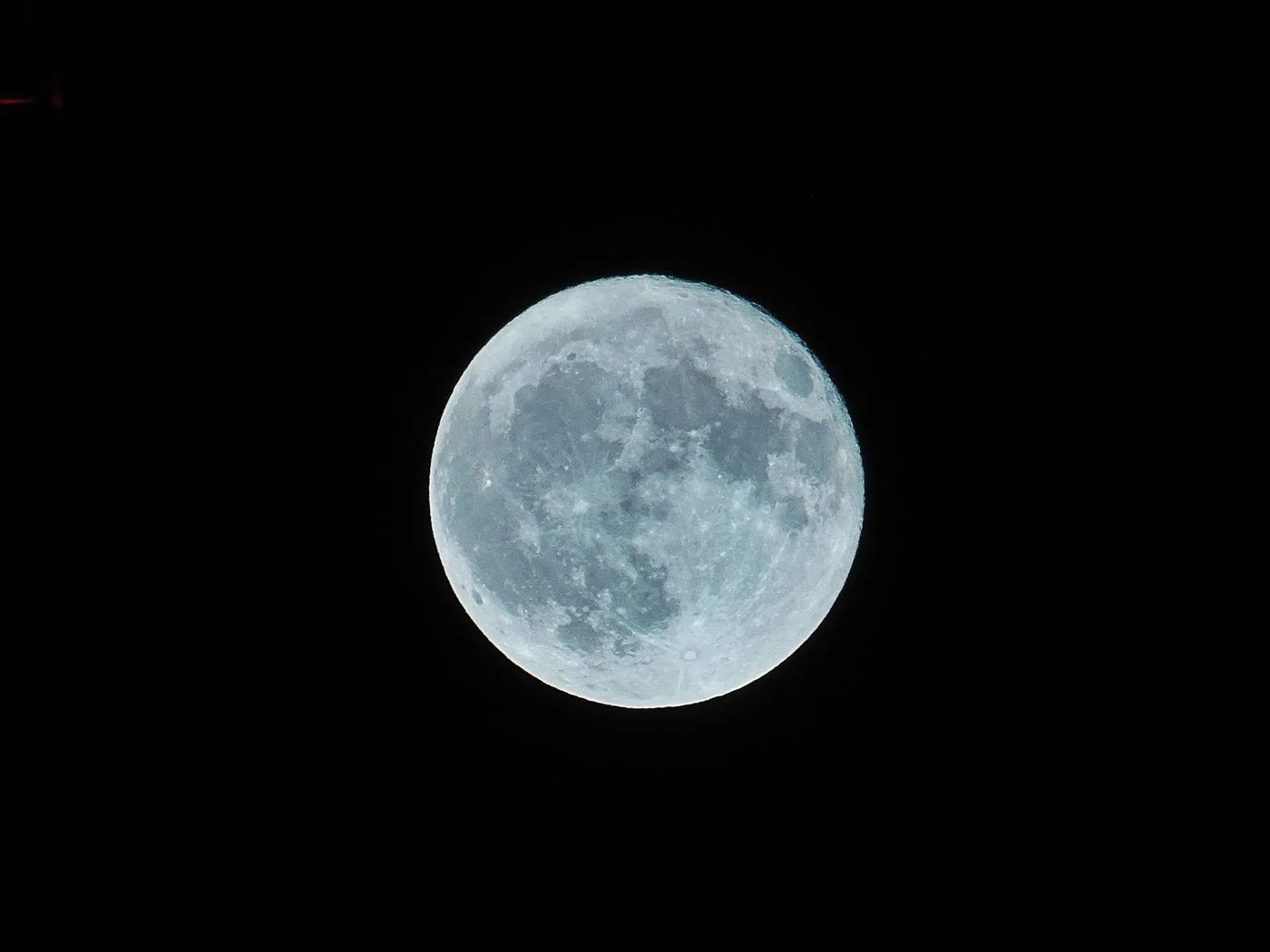
NASA’s viewing guide recommends trying phases other than full Moon to distinguish craters and mountains: surface shadows make features easier to separate. The familiar bright full disk is therefore not the only worthwhile view. Start with an unaided-eye sighting. Never look at the Sun through binoculars or a telescope, and do not sweep optics around the daytime sky to search near it. The accompanying full-Moon file photograph illustrates the object; it is not a photograph of a daylight observation or the phase on the publication date.